Vision. Community. Momentum.The Prayer Book Society of Canada celebrates the Book of Common Prayer as the standard of doctrine
and worship for Canadian Anglicans, and seeks to foster a rediscovery of this way of worship, devotion
and reading of Scripture within the Anglican Churches and beyond.
Rediscover a Vibrant TraditionThe Book of Common Prayer is a book of worship that was refined in the crucible of the Reformation in England. Its compilers' aim was to condense the Latin service books of the medieval Church, producing in English a volume which would not discard the liturgical heritage of the west, but rather prune away unscriptural accretions to more clearly reflect the Christianity of the Bible and the early Church.
Our common calling as the followers and disciples of Jesus is to grow up into our Christian maturity, so that our spiritual identity as the citizens of heaven and the members of Christ’s body becomes continually stronger and more clear.
Many in our day find the military language in that Epistle reading off-putting and offensive. But we want to be careful not to miss or dismiss Paul’s point – that there is a real, spiritual battle against evil and darkness.
The Revd. Joel Webb, the pastor of a Free Methodist Church in Croswell, Michigan, describes his introduction of the traditional one-year BCP lectionary into his church’s worship.
A service of Evensong according to the BCP will be held at 5 pm at St. John the Evangelist’s Church, followed by a potluck supper and an address by Dr. Torrance Kirby of McGill University. Further details available…
The Revd. Canon Dr. Gordon Maitland, National Chairman of the PBSC, reviews the current status of the
long-awaited reprinting of the BCP, and describes the ongoing contribution of the Society to the work.
The annual PBSC bursaries programme is now open. The Society offers bursaries of up to $1,000 to theological students who support the use of the Book of Common Prayer. The deadline for applications this year is November 6th, 2026.
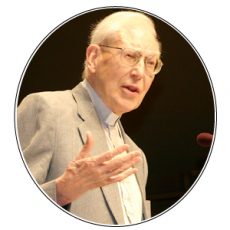
An address given by Dr. Packer to members of the PBSC on November 2nd, 1996 at the Church of St. John the Evangelist in Kitchener, Ontario. Dr. Packer gives a penetrating analysis of the meaning and importance of Scriptural authority.
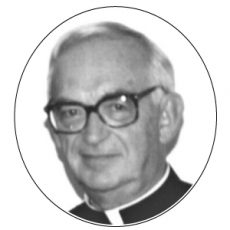
In this address delivered in Toronto in 2004, Dr. Crouse explains the coherence and interconnectedness of the Bible readings that are appointed in the Prayer Book eucharistic lectionary for Lent and the three Sundays preceding it.
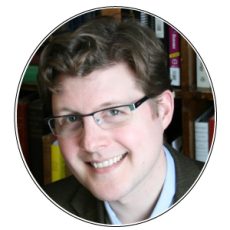
Dr. Jesse Billett of the Faculty of Divinity at Trinity College, Toronto, explains how the 1962 Canadian BCP remains true to the foundational principles of the Anglican way of being Christian, and highlights the theological consensus that was a hallmark of the book.
This free, user-friendly app automatically generates the daily BCP services for any day of the year, including the Psalms, Bible lessons, collects and seasonal variations.
Offered here are a teen education curriculum, a book trilogy on the Prayer Book, and three video series on the Bible and the BCP, the Holy Trinity, and Baptism prep.